Active Noise Cancelling
24H Battery
40mm Drivers
USB-C Fast Charge
Built-in Mic
Foldable Design
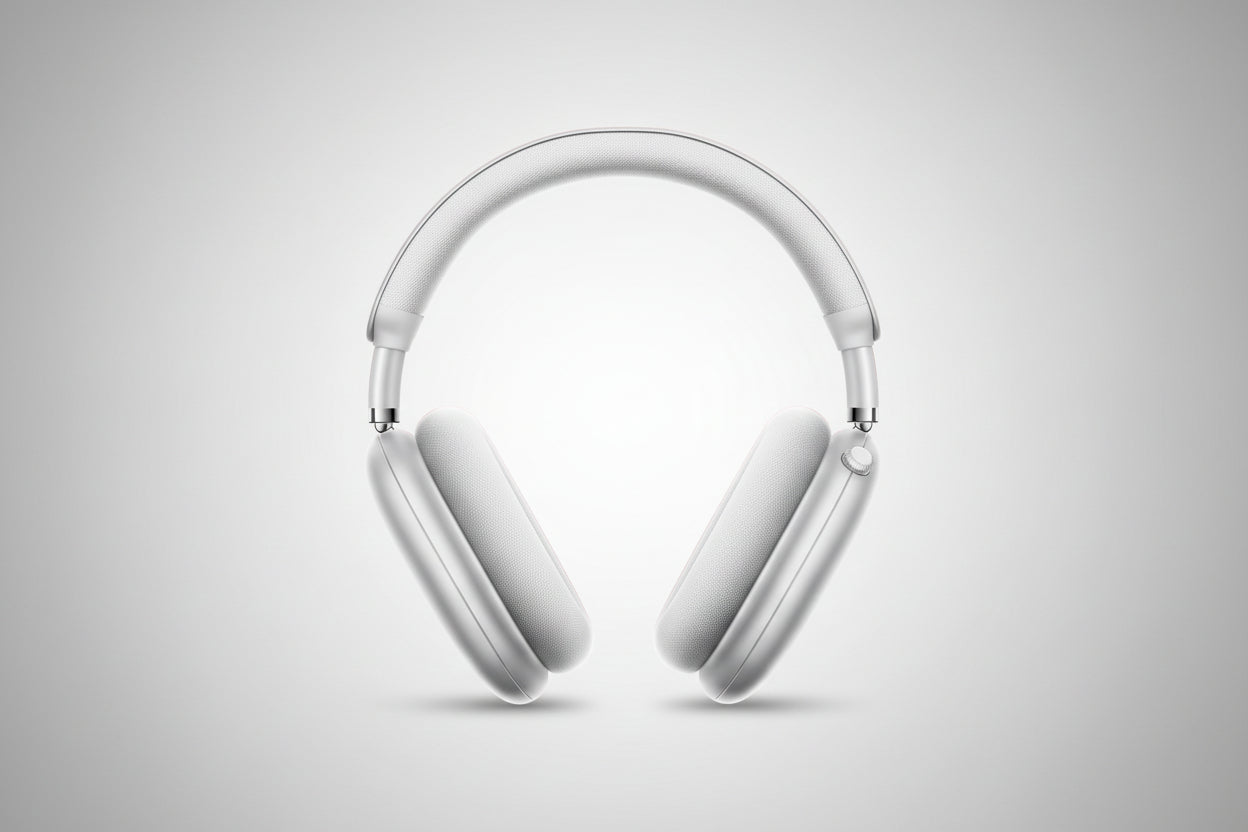
Bluetooth Wireless Over-Ear Headphones with Active Noise Cancelling — White, 24H, Built-In Mic
Silence your surroundings, hear your music the way it was meant to sound, and take calls hands-free — all day, without reaching for the charger.
White
White — Soft Matte Pearl Finish
A warm off-white with a soft-touch matte coating — not stark clinical white, but a creamy pearl tone that reads clean against any outfit without showing wear the way a gloss white would.
Soft-touch matte
Fingerprint-resistant
Scratch-resistant coating
24H
ANC On
Battery life
40H
ANC Off
Passive mode
40mm
Driver
Dynamic
-35
dB ANC
Noise reduction
10min
= 3H
Fast charge
5.3
BT
Latest standard
iPhone (all models)
Android smartphones
MacBook / Mac
Windows PC / laptop
iPad / Android tablet
3.5mm wired mode (cable included)
Offices, trains, open-plan coffee shops, and long-haul flights all share one thing: relentless low-frequency background noise that makes concentration work rather than letting it happen naturally. These active noise cancelling over-ear headphones use dual feedforward and feedback microphones on each ear cup to sample ambient sound and generate an inverse waveform that cancels up to -35dB of continuous background noise — the hum of HVAC systems, engine drone on flights, and the low rumble of road traffic disappear, leaving the audio you want to hear.
The 40mm dynamic drivers deliver a wide soundstage with clear separation between instruments — bass that you feel without it overrunning the mids, and treble that stays crisp rather than harsh. At 24 hours with ANC active (40 hours in passive mode), a full charge lasts the better part of a working week for daily commuters. When the battery does run low, 10 minutes of USB-C charging delivers 3 hours of playback — enough for a flight before a full charge is complete.
The built-in microphone — independent from the ANC microphone array — uses beamforming to isolate your voice for calls while suppressing wind noise and ambient sound. Calls, voice assistants, and video conferencing all work without removing the headphones. The foldable design collapses the ear cups flat against the headband, reducing the packed footprint to fit in the included carry case.
What sets them apart
🔇
-35dB Active Noise Cancelling
Dual feedforward + feedback mics cancel continuous low-frequency noise — HVAC, engine drone, and open-office chatter
🔊
40mm Dynamic Drivers
Wide soundstage, deep bass, and clear highs — tuned for a balanced response across music, calls, and podcasts
🔋
24H ANC / 40H Passive
Full week of commuting on one charge in passive mode — 24H with ANC running continuously
⚡
10-Min Fast Charge = 3H
USB-C quick charge gets you through a flight when you've forgotten to charge overnight
🎙️
Beamforming Call Mic
Dedicated call microphone isolates your voice — call quality holds up on windy streets and noisy offices
🎧
Foldable + Carry Case
Ear cups fold flat — fits in the hard-shell case for bag carry without adding bulk to packed luggage
Three listening modes
ANC Mode
Full Noise Cancellation
Maximum -35dB cancellation — best for flights, commuting, open-plan offices, and deep focus work where ambient noise is continuous and low-frequency.
Transparency Mode
Ambient Pass-Through
Amplifies external audio through the mic array so you can hear announcements, conversations, and traffic without removing the headphones.
Passive Mode
ANC Off — 40H Battery
ANC circuitry off — extends battery to 40 hours. The over-ear cup design still provides 15–20dB of passive isolation from the physical seal.
What's in the box
×1
Over-ear headphones — White
×1
Hard-shell carry case
×1
USB-C charging cable
×1
3.5mm audio cable (wired mode)
×1
Airline seat adapter (dual-pin)
×1
Quick start guide
Product specifications
Driver size40mm dynamic
Frequency response20Hz – 20kHz
Impedance32Ω
Bluetooth version5.3
Bluetooth rangeUp to 15 metres
Codec supportSBC, AAC, aptX
ANC typeHybrid — feedforward + feedback
ANC reductionUp to -35dB
Transparency modeYes — ambient pass-through
Battery — ANC on24 hours
Battery — ANC off40 hours
Fast charge10 min USB-C = 3 hours playback
Full charge timeApprox. 2 hours via USB-C
Wired mode3.5mm audio jack — passive, no battery
MicrophoneBuilt-in beamforming call mic
Multipoint pairingYes — 2 devices simultaneously
Ear cup designOver-ear, memory foam cushions
FoldableYes — flat fold with hard case
Weight248g
ColorWhite — soft-touch matte finish
How hybrid ANC works — and why it outperforms single-mic systems
Active noise cancellation comes in three configurations. Feedforward ANC places a microphone on the outside of the ear cup, sampling incoming ambient sound before it reaches the ear, and generating an opposing waveform to cancel it. Feedback ANC places a microphone on the inside of the ear cup, sampling what actually reaches the ear after passive isolation, and correcting any residual noise. Hybrid ANC — used in these headphones — combines both approaches: the outside mic handles the primary cancellation of incoming sound, and the inside mic catches anything that slips through, producing up to -35dB reduction across the full low-frequency range where ambient noise is most fatiguing. Single-mic (feedforward only) systems typically achieve -20 to -25dB. The hybrid approach is the architecture used in premium noise-cancelling headphones and produces meaningfully quieter results at the same price tier.
24 hours vs. 40 hours — understanding the battery difference
ANC requires the headphones' DSP processor to run continuously, sampling from four microphones and performing real-time signal inversion at audio frequencies. This processing draws approximately the same power as the Bluetooth radio — running ANC roughly halves the battery life compared to passive Bluetooth-only mode. The 24-hour ANC figure assumes continuous ANC-on use at 50% volume, which reflects real-world usage accurately. In passive mode (ANC off), the Bluetooth chip and 40mm drivers are the only active power draws, extending runtime to 40 hours. For most users — ANC on during commutes and flights, off during casual listening at a desk — real-world battery between charges is typically 4–6 days of daily use.
aptX codec — better audio than standard Bluetooth
Bluetooth audio is compressed before transmission. The default SBC codec compresses aggressively, producing audible quality loss at high frequencies. AAC (used by Apple) transmits at higher quality and is the standard codec for iPhone listeners. aptX — supported by these headphones and by most Android flagship phones — uses a different compression algorithm that preserves more of the original audio signal, particularly in the 15–20kHz frequency range where cymbal detail and vocal air live. If your phone supports aptX (most modern Android devices do), the headphones will negotiate the higher-quality codec automatically, with no settings changes required. The difference is most noticeable on well-recorded music at moderate to high volumes.
White headphones — keeping them clean
White headphones attract visible grime from hands, skin oils, and dust faster than dark colorways. The soft-touch matte coating on these headphones is less prone to fingerprint accumulation than a gloss finish, but regular cleaning extends their appearance. Use a slightly damp cloth with mild soap for the ear cup exterior — avoid abrasive cloths or solvent cleaners that degrade the soft-touch coating. The memory foam ear cushions are the highest-contact area: wipe weekly with a dry microfiber cloth and monthly with a lightly damp one. Do not saturate the cushion material. The headband padding, if removable, can be spot-cleaned with mild soap. Allow all surfaces to dry completely before folding and storing in the case.
Over-ear vs. on-ear — why cup design affects noise cancellation
Over-ear headphones place the ear cup entirely around the ear, with the cushion resting on the skull surrounding the ear. On-ear headphones rest the cup directly on the ear cartilage. For ANC performance, over-ear wins clearly: the larger cup creates a more complete acoustic seal, providing 15–20dB of passive noise isolation before the ANC circuitry activates, which means the active system has less residual noise to cancel and can perform closer to its rated specification. On-ear designs typically achieve only 5–10dB of passive isolation, making the ANC work harder and less effectively. For extended wear, over-ear also distributes clamping pressure across the skull rather than concentrating it on the ear cartilage — significantly more comfortable for sessions longer than 2 hours.
Frequently asked questions
Does ANC work in wired mode? No. ANC requires power from the headphone's battery to run the DSP processor and microphone array. In wired mode (3.5mm cable, battery off), the headphones operate as passive headphones with no ANC — but still provide the physical passive isolation of the over-ear design, approximately 15–20dB of noise reduction.
Can I use these for video calls on a laptop? Yes. The built-in microphone works as a standard Bluetooth audio input device on Windows and macOS — Zoom, Teams, Meet, and other video conferencing apps detect it automatically when paired. Set it as the input source in the application's audio settings.
Does Transparency Mode work well outdoors? Transparency Mode amplifies ambient audio through the microphone array at close to natural volume — it is designed for situational awareness rather than a high-fidelity ambient experience. Wind noise is partially suppressed but can become noticeable at high wind speeds. It works well at moderate outdoor noise levels for conversations, traffic awareness, and station announcements.
Do they work with iPhone without an app? Yes. These headphones pair with iPhone via standard Bluetooth — no app, no account required. All controls (play, pause, skip, volume, ANC toggle) are on the ear cup. An optional companion app is available for EQ customisation and ANC level adjustment, but the headphones function fully without it.
How do multipoint pairing and device switching work? After pairing with two devices, the headphones maintain Bluetooth connections to both simultaneously. Audio plays from the active streaming source. When a call comes in on the second device, audio switches automatically. To manually switch sources, pause playback on the current device and play on the second — the headphones switch within 2–3 seconds without re-pairing.